
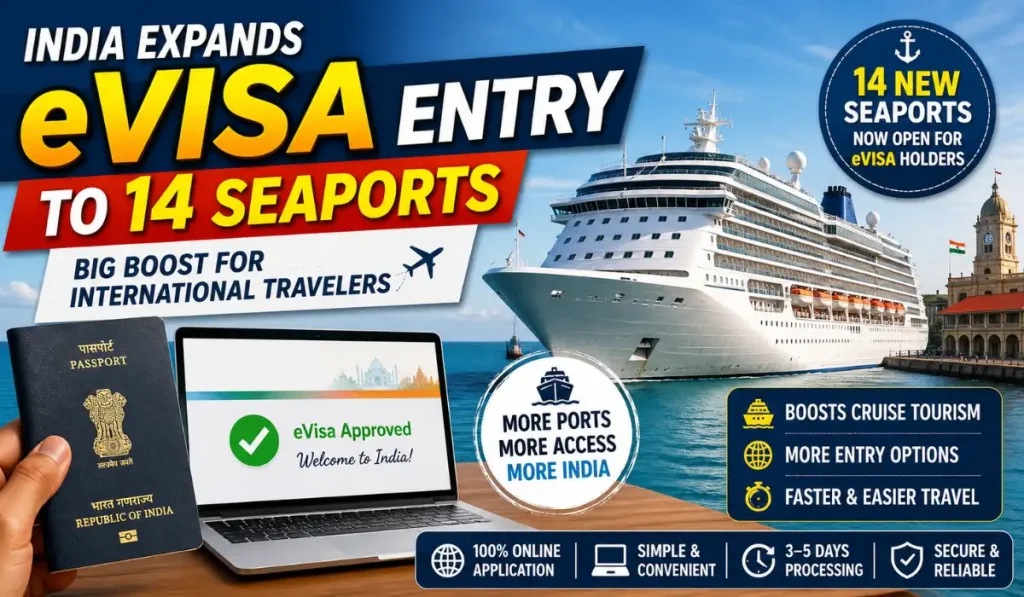
In a major travel update for 2026, the Indian government has expanded its eVisa entry system to 14 additional seaports, making it easier for international travelers to enter the country by sea.
This move is expected to significantly enhance cruise tourism, maritime travel, and global connectivity, while simplifying the entry process for foreign visitors.
What Has Changed in India’s eVisa System?
India’s Ministry of Home Affairs has officially designated 14 new seaports as Immigration Check Posts (ICPs). This means that travelers holding a valid eVisa can now enter India through these ports without needing a traditional visa stamp.
Earlier, eVisa entry was limited mainly to airports and a few seaports. With this expansion, travelers now have more flexible entry options across air and sea routes.
Why This Update Matters for Travelers
The expansion is a strategic move to:
- Boost international tourism
- Support cruise travel industry
- Improve ease of entry for foreign nationals
With more ports equipped to handle immigration procedures, travelers can now plan more diverse travel routes into India.
This is especially beneficial for:
- Cruise passengers
- Business travelers arriving via ports
- Tourists exploring coastal regions
Why Seaports Require Visa Entry Systems
Unlike airports, many seaports previously lacked proper immigration infrastructure. The government has now upgraded facilities to ensure:
- Secure passenger verification
- Document checks
- Immigration control protocols
This ensures that visa regulations at seaports match international security standards.
Important: Some Ports Still Require Regular Visa
Despite the expansion, not all ports are covered under the eVisa system yet.
There are still some Indian ports where entry is not allowed without a regular visa, mainly due to:
- Lack of immigration infrastructure
- Limited processing capabilities
Travelers must check entry eligibility before planning their journey.
India eVisa Network Continues to Grow
India’s eVisa program has expanded rapidly over the years. With the addition of new ports, the country now offers a wider network of entry points across airports, seaports, and land borders.
This reflects India’s broader strategy to:
- Simplify travel procedures
- Attract more international visitors
- Strengthen tourism infrastructure
How to Apply India Online Visa (eVisa)
Travelers planning to visit India can easily apply India online visa through a simple digital process:
Steps to apply:
- Fill out the online visa application form
- Upload passport and required documents
- Pay the visa fee online
- Receive eVisa approval via email
The entire process is:
- 100% online
- Fast and convenient
- No embassy visit required
Processing Time for India eVisa
- Standard processing: 3–5 days
- Fast approvals: 24–72 hours
Applying correctly ensures quicker approval.
Impact on Tourism & Travel Industry
This latest update is expected to:
- Increase cruise tourism in India
- Improve international travel experience
- Attract more foreign visitors
By expanding eVisa access, India is positioning itself as a more accessible and traveler-friendly destination in 2026.
Final Thoughts
The addition of 14 new seaports to India’s eVisa network marks a significant step toward modernizing the country’s travel infrastructure.
For international travelers, this means:
- More entry options
- Easier travel planning
- Faster visa processing
If you’re planning a trip, now is the perfect time to apply India online visa and explore India with greater convenience than ever before.