
India is one of the most popular travel destinations for Irish travelers. From the beautiful palaces of Rajasthan to the peaceful beaches of Goa and the spiritual beauty of Varanasi, India offers unforgettable experiences for every visitor. If you are planning a trip from Ireland to India, getting an Indian eVisa is now simple and convenient.
The India eVisa system allows travelers from Ireland to apply online without visiting an embassy or consulate. The entire process is digital, fast, and easy to understand. Whether you are visiting India for tourism, business, medical treatment, or attending a conference, the Indian eVisa makes travel easier for Irish citizens.
This guide explains everything about the India Visa for Ireland Citizens, including visa types, documents, processing time, and the online application process.
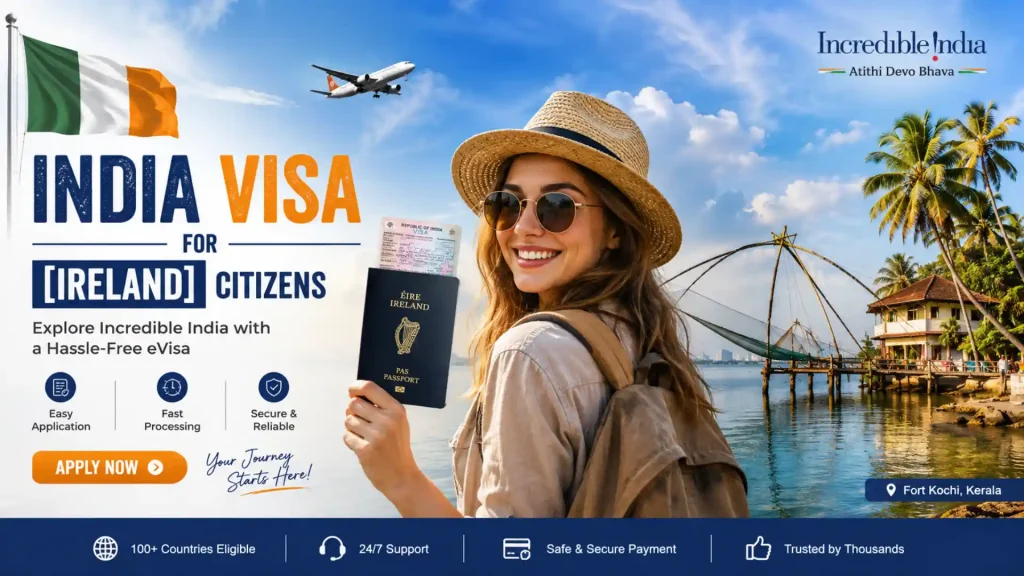
Can Ireland Citizens Apply for India eVisa?
Yes, Ireland citizens can apply for an Indian eVisa online. The of India allows Irish passport holders to use the eVisa system for short-term visits.
The Indian eVisa is a digital travel authorization that allows eligible travelers to enter India without needing a physical visa stamp in their passport before travel. Applicants can complete the entire process online from their home or office.
The India Visa for Ireland Citizens is available for different travel purposes such as tourism, business, medical visits, and conferences.
After approval, the eVisa is sent directly to the applicant’s email address. Travelers must carry a printed copy while entering India.
Types of Indian eVisa
Irish citizens can choose different Indian eVisa categories depending on the purpose of travel.
Tourist eVisa
The Tourist eVisa is the most common visa type for Irish travelers visiting India for holidays, sightseeing, yoga retreats, family visits, or cultural trips.
Tourist eVisas are usually available in different validity options such as:
- 30-Day Tourist eVisa
- 1-Year Tourist eVisa
- 5-Year Tourist eVisa
This visa is perfect for travelers exploring famous Indian destinations like Delhi, Kerala, Goa, Jaipur, Mumbai, and Agra.
Business eVisa
The Business eVisa is for Ireland citizens visiting India for:
- Business meetings
- Trade events
- Conferences
- Market research
- Industrial visits
Business travelers may need additional documents like a business card or invitation letter from an Indian company.
Medical eVisa
The Medical eVisa is issued to travelers visiting India for medical treatment at recognized hospitals or healthcare centers.
India is becoming a popular medical tourism destination because of affordable and quality healthcare services.
Conference eVisa
This visa category is available for travelers attending official conferences, seminars, or -approved events in India.
Applicants may need invitation letters and event approval documents.
Required Documents for India Visa for Ireland Citizens
Before starting the application, Irish citizens should prepare the required documents carefully. Incorrect or unclear documents can delay approval.
Here are the main documents required for an Indian eVisa:
Valid Irish Passport
Applicants must hold a valid Irish passport with:
- Minimum 6 months validity from arrival date
- At least 2 blank pages
Passport Size Photograph
A recent passport-style photo is required. The image should:
- Have a white background
- Show a clear front face
- Be high quality
Passport Scan Copy
Applicants must upload a scanned copy of the passport information page containing:
- Personal details
- Passport number
- Photo
Email Address
A valid email address is required to receive updates and the approved eVisa.
Debit or Credit Card
Applicants need an online payment method to pay the visa fee.
Additional Documents
Depending on the visa type, extra documents may be needed:
- Business card for Business eVisa
- Invitation letter
- Hospital letter for Medical eVisa
- Conference invitation for Conference eVisa
How to Apply for India Visa for Ireland Citizens
The application process for an Indian eVisa is simple and fully online. Irish travelers can complete the process in a few easy steps.
Step 1: Fill Out the Online Application Form
Applicants must enter personal and travel details such as:
- Full name
- Nationality
- Passport details
- Travel purpose
- Arrival information
Make sure all information matches the passport exactly.
Step 2: Upload Documents
Upload the required documents including:
- Passport scan
- Passport photo
- Supporting documents if required
Documents should be clear and readable.
Step 3: Pay the Visa Fee
Applicants can pay the India eVisa fee online using:
- Credit card
- Debit card
Payment confirmation is usually sent by email.
Step 4: Receive the eVisa by Email
After approval, the India eVisa is delivered by email. Travelers should print a copy and carry it while traveling to India.
Step 5: Travel to India
Upon arrival in India, immigration officers will verify the passport and eVisa before granting entry.
Processing Time for India Visa for Ireland Citizens
The processing time for an Indian eVisa is generally quick. Most applications are approved within a few business days.
Typical processing times include:
- Standard Processing: 3 to 5 business days
- Urgent Processing: Faster approval may be available in some cases
Applicants should apply at least one week before travel to avoid last-minute delays.
Incorrect documents, incomplete applications, or public holidays may increase processing time.
Important Travel Notes
Irish travelers should keep these important points in mind before visiting India.
Carry Printed Documents
Even though the visa is electronic, travelers should carry:
- Printed eVisa copy
- Passport
- Travel itinerary
Entry Through Authorized Airports and Seaports
Indian eVisa holders must enter India through approved airports and seaports.
Follow Visa Validity Rules
Travelers must enter India within the visa validity period. Overstaying can lead to penalties or future travel restrictions.
Respect Local Laws and Culture
India is culturally diverse. Visitors should respect local customs, traditions, and laws during their stay.
Health and Travel Insurance
Travel insurance is highly recommended for international travel. It can help during medical emergencies, flight delays, or lost luggage situations.
Benefits of India eVisa for Ireland Citizens
The India eVisa system offers many advantages for Irish travelers.
Fully Online Process
Applicants can apply from anywhere without visiting an embassy.
Faster Approval
Most visas are processed within a few days.
Easy Documentation
The document process is simple and user-friendly.
Multiple Visa Options
Travelers can choose visa types based on their travel purpose.
Convenient Travel Experience
The eVisa system saves time and reduces paperwork.
FAQ
Do Ireland citizens need a visa for India?
Yes, Irish citizens need a visa to enter India. Eligible travelers can apply online through the Indian eVisa system.
Can Ireland citizens apply for an Indian eVisa online?
Yes, Ireland passport holders can complete the entire India eVisa application online.
How long does it take to get an Indian eVisa?
Most applications are processed within 3 to 5 business days.
What is the validity of the Indian Tourist eVisa?
Tourist eVisas are available in different validity periods such as 30 days, 1 year, and 5 years.
Is printing the India eVisa necessary?
Yes, travelers should carry a printed copy of the approved eVisa while traveling to India.
Can Irish citizens get a business visa for India?
Yes, Ireland citizens can apply for an Indian Business eVisa for meetings, trade, and business-related activities.
What happens if my India eVisa application is rejected?
If an application is rejected, applicants may need to correct errors and apply again with proper documents.
Can I extend my Indian eVisa?
Most Indian eVisas are not extendable. Travelers should check visa conditions before applying.
Which passport validity is required for India travel?
The passport should remain valid for at least 6 months from the arrival date in India.
Is the India eVisa suitable for tourism?
Yes, the Tourist eVisa is ideal for holidays, sightseeing, yoga retreats, and family visits in India.