
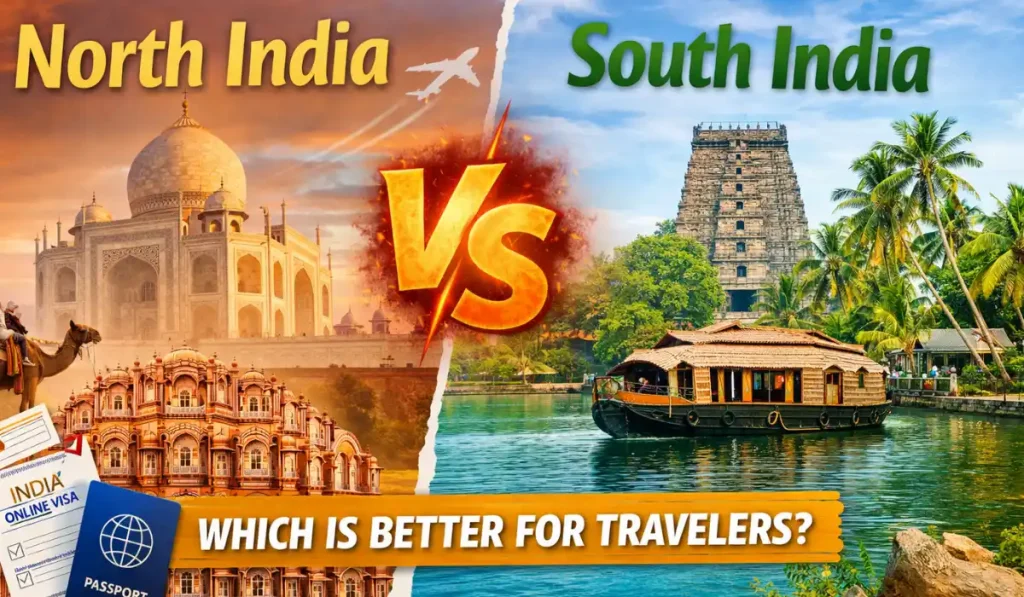
India is one country, but when you travel across it, you feel like you are visiting many different worlds. One of the most common questions travelers ask before planning their trip is North India vs South India – which is better for travelers?
Both regions are beautiful, rich in culture, and full of experiences. But they are very different in lifestyle, food, weather, culture, and travel style. Because of these differences, choosing between North India vs South India can feel confusing, especially for first-time visitors.
This article explains everything in a simple and clear way. By the time you finish reading, you will clearly understand which part of India suits your travel needs the best.
Understanding the Core Difference: North India vs South India
The comparison of North India vs South India is not about deciding which place is superior. It is about understanding how different the experiences are.
North India includes popular states like Delhi, Rajasthan, Uttar Pradesh, Punjab, Himachal Pradesh, and Kashmir. South India includes Tamil Nadu, Kerala, Karnataka, Andhra Pradesh, and Telangana.
North India feels energetic, crowded, colorful, and fast-paced. South India feels calm, peaceful, organized, and relaxed. This basic difference sets the tone for the entire North India vs South India travel experience.
Weather and Climate: A Big Travel Factor
Weather is one of the first things travelers notice when comparing North India vs South India.
North India experiences extreme seasons. Summers can be very hot, especially in cities like Delhi and Jaipur. Winters can be cold, especially in mountain areas like Himachal Pradesh and Kashmir. The best time to visit North India is from October to March.
South India has a more stable climate. It stays warm most of the year and does not have harsh winters. Coastal areas like Kerala have tropical weather, and hill stations remain pleasant. Monsoon season brings rain, but it also makes nature more beautiful.
If you prefer mild and predictable weather, South India may feel more comfortable. This makes climate an important point in the North India vs South India discussion.
Culture and Local Life Experience
Culture plays a major role in North India vs South India.
North India is known for grand festivals, loud celebrations, busy markets, and expressive people. Life feels fast and full of movement. You will see Mughal architecture, royal palaces, ancient forts, and busy city life.
South India offers a more peaceful cultural experience. Temples, daily rituals, classical music, and traditional lifestyles are deeply rooted in everyday life. People are polite, calm, and respectful, especially toward tourists.
If you enjoy energy, crowds, and festivals, North India may attract you more. If you prefer peace and balance, South India might be a better choice. This cultural contrast is a key part of North India vs South India.
Food Experience: North India vs South India
Food is one of the most exciting parts of traveling in India, and it is also one of the biggest differences in North India vs South India.
North Indian food is rich and filling. You will find dishes like butter chicken, dal makhani, naan, paratha, and kebabs. Food often includes dairy products like butter, cream, and ghee. Street food is very popular and full of flavor.
South Indian food is lighter and often healthier. Rice-based meals like dosa, idli, sambar, and coconut curries are common. Food is spicy but fresh, and seafood is popular in coastal areas.
Travelers who enjoy heavy meals may prefer North India, while those who like lighter food often enjoy South India more. Food alone can influence your North India vs South India travel decision.
Tourist Attractions and Sightseeing
When it comes to sightseeing, North India vs South India both offer unforgettable places.
North India is home to world-famous landmarks like the Taj Mahal, Jaipur forts, Varanasi ghats, and Himalayan mountains. It is perfect for travelers who love history, monuments, and spiritual experiences.
South India is known for natural beauty, peaceful beaches, green hills, backwaters, wildlife, and ancient temples. Kerala backwaters, Hampi ruins, and hill stations like Ooty are ideal for relaxation.
If you want famous monuments and history, North India is a strong choice. If you want nature and calm surroundings, South India is ideal. This makes sightseeing an important part of North India vs South India.
Language and Communication
Language is another factor when comparing North India vs South India.
In North India, Hindi is widely spoken, and English is understood in most tourist areas. Communication is usually easy for international travelers.
In South India, local languages are commonly spoken, but English is also widely used, especially in cities and tourist places.
Overall, communication should not be a problem in either region, but North India may feel slightly easier for first-time travelers. Language differences still play a role in the North India vs South India experience.
Safety, Cleanliness, and Comfort
Safety is often discussed in the North India vs South India comparison.
South India is generally considered cleaner, safer, and more organized. Cities follow traffic rules better, and public spaces feel well-maintained.
North India is also safe, but crowded areas require more awareness. Tourist places can be busy, so travelers need to stay alert.
For solo travelers and families, South India often feels more comfortable, which influences the North India vs South India choice.
Travel Planning and Visa Process
Before visiting India, travelers should arrange travel documents properly. Applying for an India online visa makes the process simple and fast.
With an India online visa, travelers can explore both North India and South India without difficulty. Proper planning helps you enjoy the North India vs South India journey without stress.
Final Conclusion: North India vs South India
So, North India vs South India, which is better for travelers?
The answer depends on your travel style.
- Choose North India if you love history, famous landmarks, festivals, and rich food.
- Choose South India if you prefer peace, nature, temples, beaches, and comfort.
Many travelers visit one region first and explore the other later. With the help of an India online visa, you can experience both and truly understand the beauty of India.
Pingback:levitra price
Pingback:azithromycin sale